
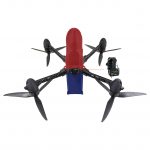

The world of unmanned aerial vehicles has entered a new era with the high-speed AI drone. Unlike traditional radio-controlled quads, these intelligent machines process sensor data at millisecond speeds, allowing them to react faster than any human pilot. Whether you are a competitive racer, a cinematic FPV pilot, or a tech enthusiast, understanding this breakthrough technology is essential.
How AI Enhances Speed
Conventional drones rely solely on manual control. When flying at 80+ mph, a split-second mistake can cause a crash. A high-speed AI drone integrates onboard neural networks that predict trajectory, detect obstacles, and adjust throttle or yaw automatically. For example, if a tree suddenly appears on a racing line, the AI can execute an evasive maneuver in under 30 milliseconds. This not only prevents accidents but also enables higher average speeds because pilots gain confidence to push limits.
Real‑World Applications
-
Drone Racing – Leagues are now introducing AI-assisted classes where pilots can toggle autonomous “gate finder” modes. The drone scans the course layout and suggests optimal acceleration points.
-
Search & Rescue – A high-speed AI drone can sweep large areas in minutes, using computer vision to spot survivors. With speeds up to 100 mph, it covers more ground than a traditional quad.
-
Cinematography – Following a fast-moving car or a skier down a slope requires split-second framing. AI subject tracking keeps the target centered even during aggressive dives and rolls.
Key Technical Features
-
5G or 6G connectivity for low‑latency video transmission.
-
4K/8K high‑frame‑rate cameras (120 fps or more) for blur‑free action shots.
-
TOF (Time‑of‑Flight) sensors combined with LiDAR for all‑weather perception.
-
Battery optimization algorithms – AI learns your flight style and adjusts power draw to extend flight time from 4 to nearly 10 minutes at full throttle.
Is It for Beginners?
Many modern high-speed AI drones come with adjustable assist levels. A beginner can start with “hover assist” and “collision prevention,” then gradually reduce AI intervention. This lowers the learning curve dramatically. However, always respect local regulations – sub‑250g models are usually the safest choice for open flying.
Future Outlook
By 2027, we expect onboard AI chips capable of running full visual‑inertial odometry without cloud connectivity. That means even cheaper high-speed AI drones will navigate dense forests or abandoned buildings autonomously. For now, models like the Skydio 2+ (with racing mode) and the Autel EVO Lite+ set the standard.
