
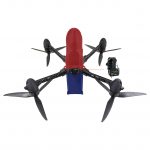
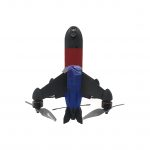
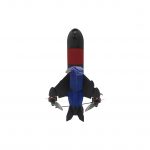

The world of first‑person view (FPV) flying has a new adrenaline champion – the rocket FPV drone. These are not your average camera drones. Built for pure velocity, a rocket FPV drone can exceed 150 mph (240 km/h) in a straight line, climb like a missile, and change direction with bone‑crushing G‑forces. If you dream of flying at the edge of physics, this guide is for you.
What Makes a Drone “Rocket”?
The term “rocket FPV drone” is a nickname for ultra‑high‑performance racing drones. Unlike standard consumer quads that hover gently, these machines use high‑KV motors, aggressive pitch propellers, and lightweight carbon fiber frames. Some custom builds even incorporate miniature solid‑rocket boosters for experimental thrust – but the mainstream rocket FPV drone relies on brushless motors running at 40,000+ RPM. The result is a thrust‑to‑weight ratio often exceeding 8:1, meaning the drone can accelerate vertically faster than a real Formula 1 car.
Record‑Breaking Speeds
The current Guinness World Record for the fastest FPV drone stands at 350 mph (563 km/h) – a custom rocket‑like quad built by a hobbyist. While extreme, production rocket FPV drones such as the DRL Racer X or iFlight Chimera 7 can comfortably hit 120–150 mph out of the box. With the right battery (6S or 8S Li‑Po) and fine‑tuned PID settings, experienced pilots regularly push beyond 180 mph in short bursts. At these velocities, ground objects appear as blurry streaks, and reaction time drops below 0.2 seconds – which is why most rocket FPV drone pilots use AI‑assisted stabilization or advanced gyro filtering.
Flight Time & Trade‑Offs
Speed comes at a cost. A rocket FPV drone typically flies for only 2–4 minutes on a full charge. Running at full throttle drains a 1300mAh battery in under 90 seconds. Serious racers carry dozens of packs. The frame is also fragile; a crash at 100+ mph often shatters arms, cameras, and antennae. However, dedicated pilots accept these trade‑offs for the unmatched thrill of rocket‑like acceleration.
Who Should Fly a Rocket FPV Drone?
This is not a beginner’s machine. You need solid FPV skills, including acro mode mastery and fast reflex training. Most rocket FPV drone pilots start with a simulator (VelociDrone or Liftoff) for months before moving to a 3‑inch or 5‑inch trainer. Safety gear is mandatory: eye protection, spotter, and flying over open fields far from people and property. Many countries legally restrict drones over 100 mph – check local aviation rules.
Future of Rocket FPV
With the rise of AI flight controllers and 5G low‑latency video, the next generation of rocket FPV drones will include real‑time obstacle prediction and automated recovery systems. Imagine a drone that automatically pulls up 10 feet before hitting a tree – even at 150 mph. This will make extreme speed accessible to more pilots without sacrificing safety. For now, the rocket FPV drone remains the ultimate expression of raw power and pilot skill. If you are ready to feel like you are strapped to a missile, start building your rocket FPV drone today.
